
The hydro-cleaning work at the sacred Mahabodhi Temple (Mahabodhi Mahavihara), a UNESCO World Heritage Site in Bodh Gaya, Bihar, was initiated by the volunteer group “Chobtham” from Thailand on 17 February 2026. The commencement was marked by a spiritually uplifting ceremony featuring solemn prayers and blessings from revered monks.
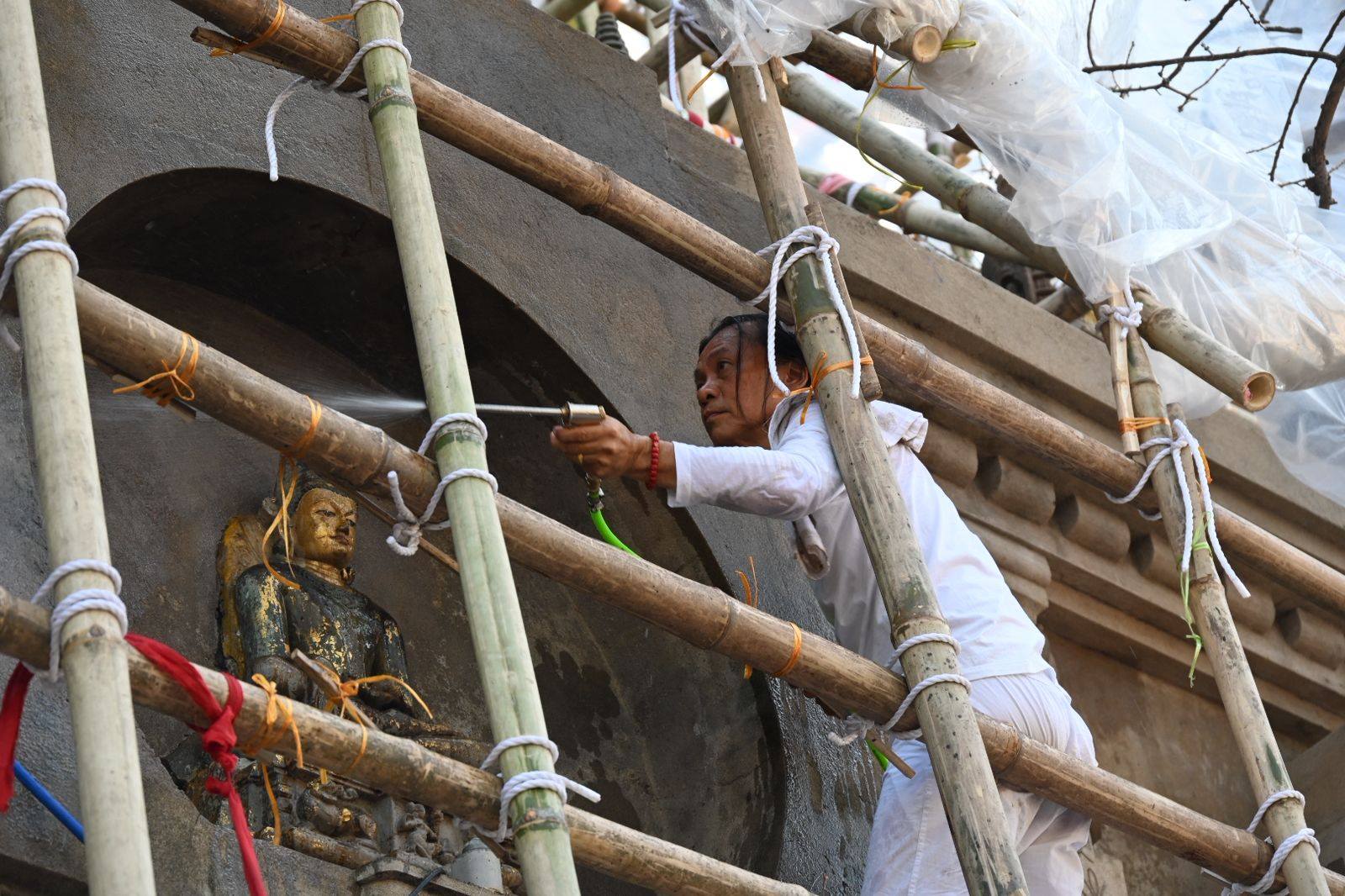
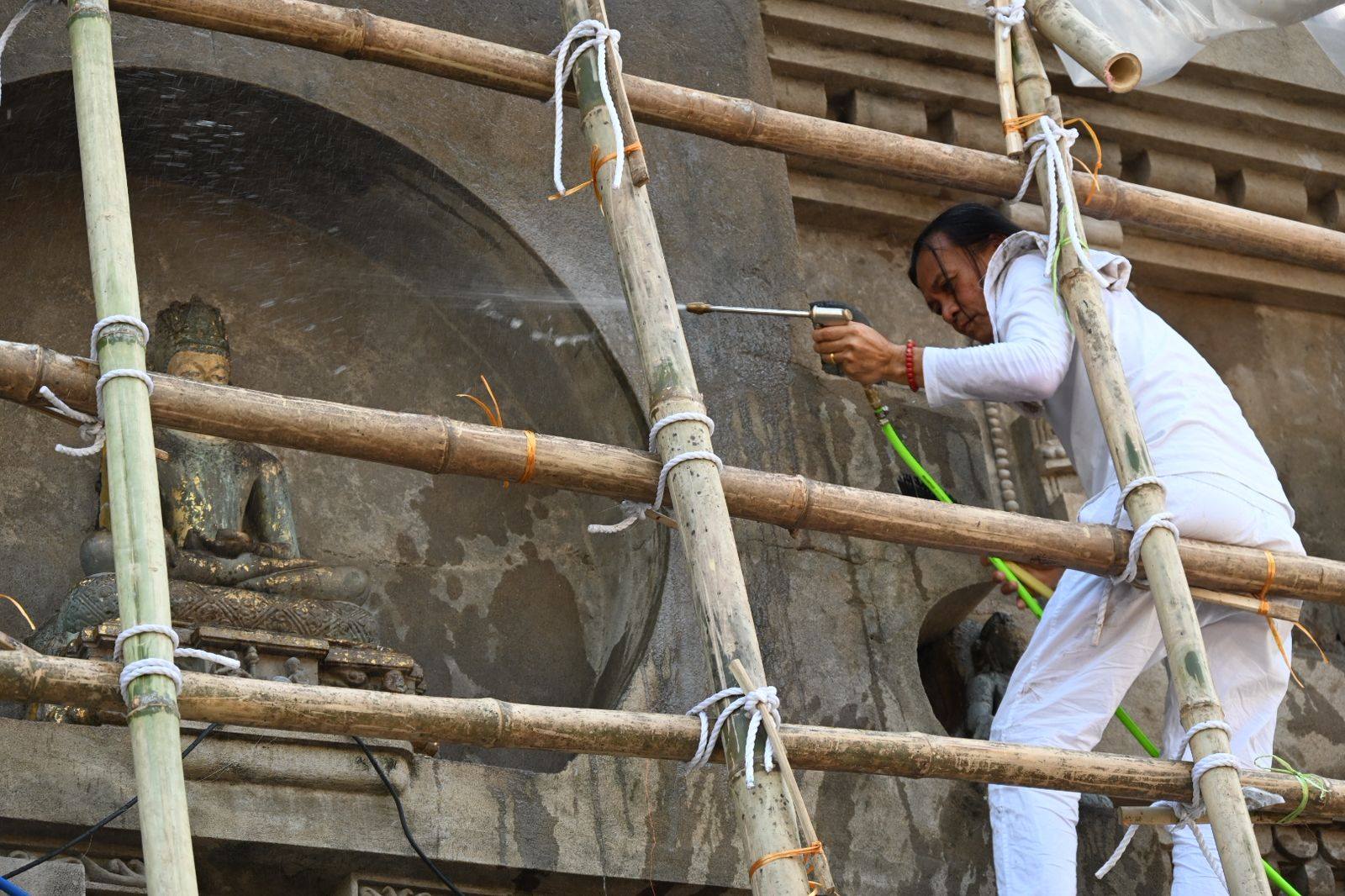
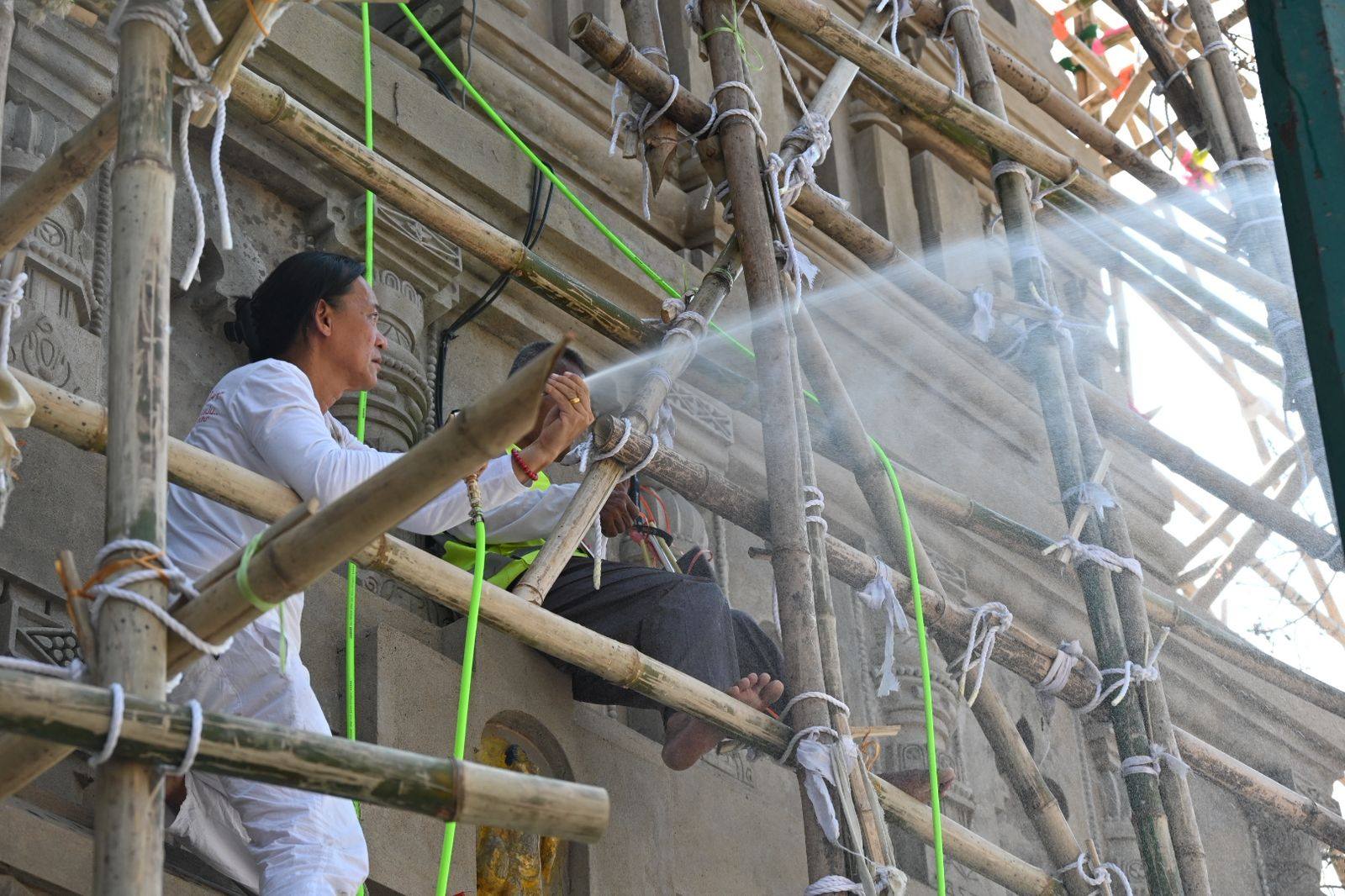
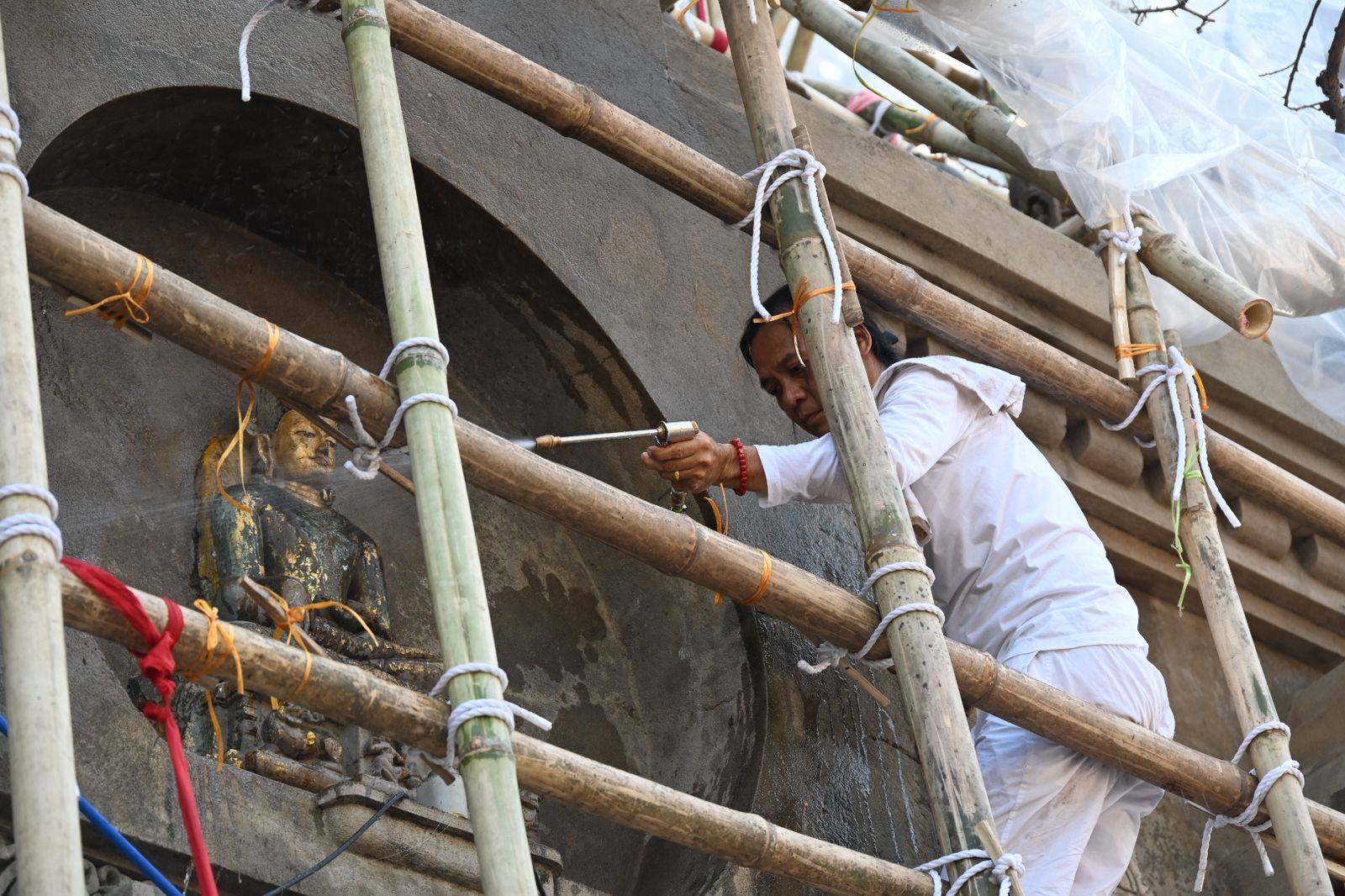
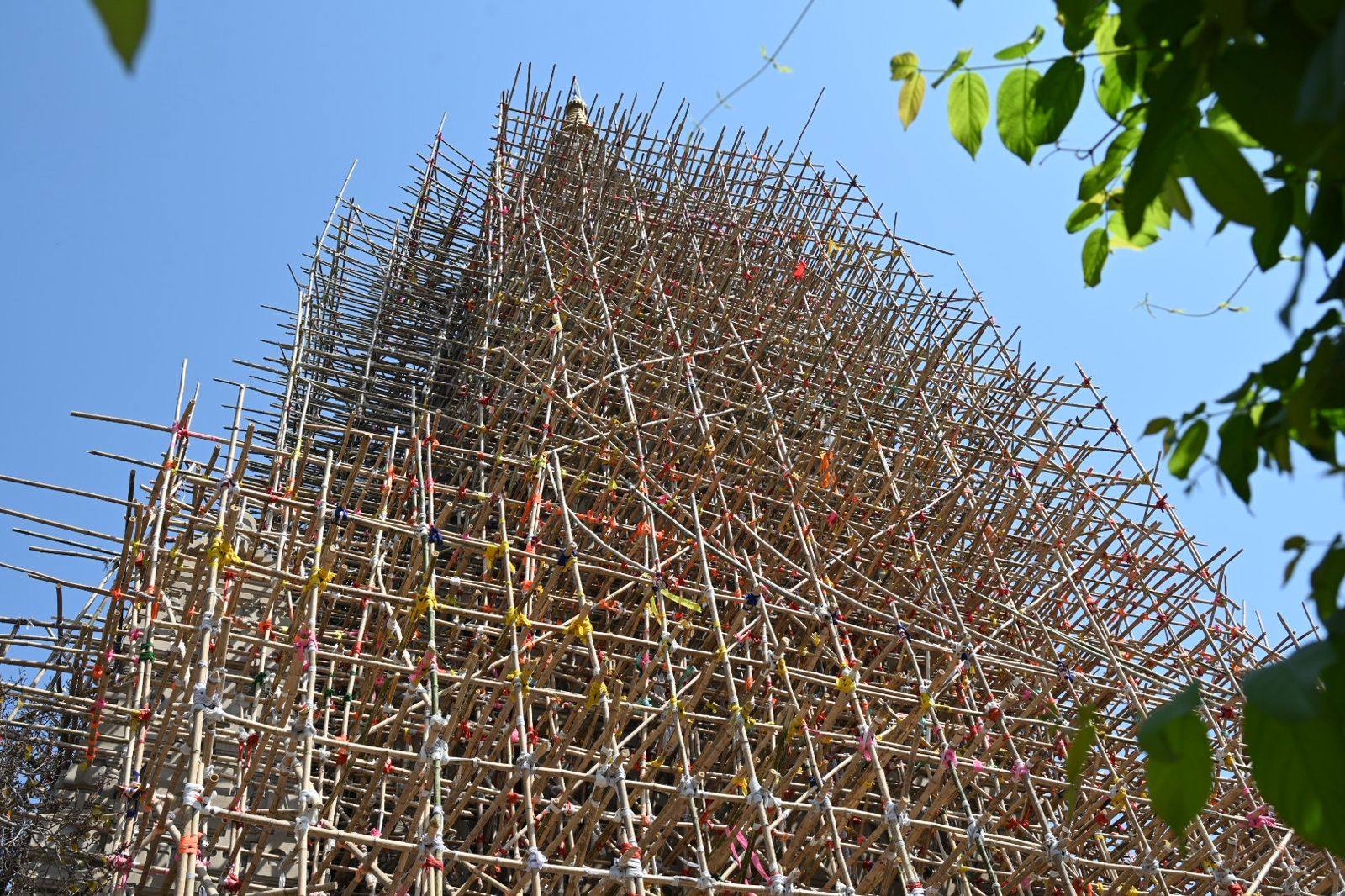
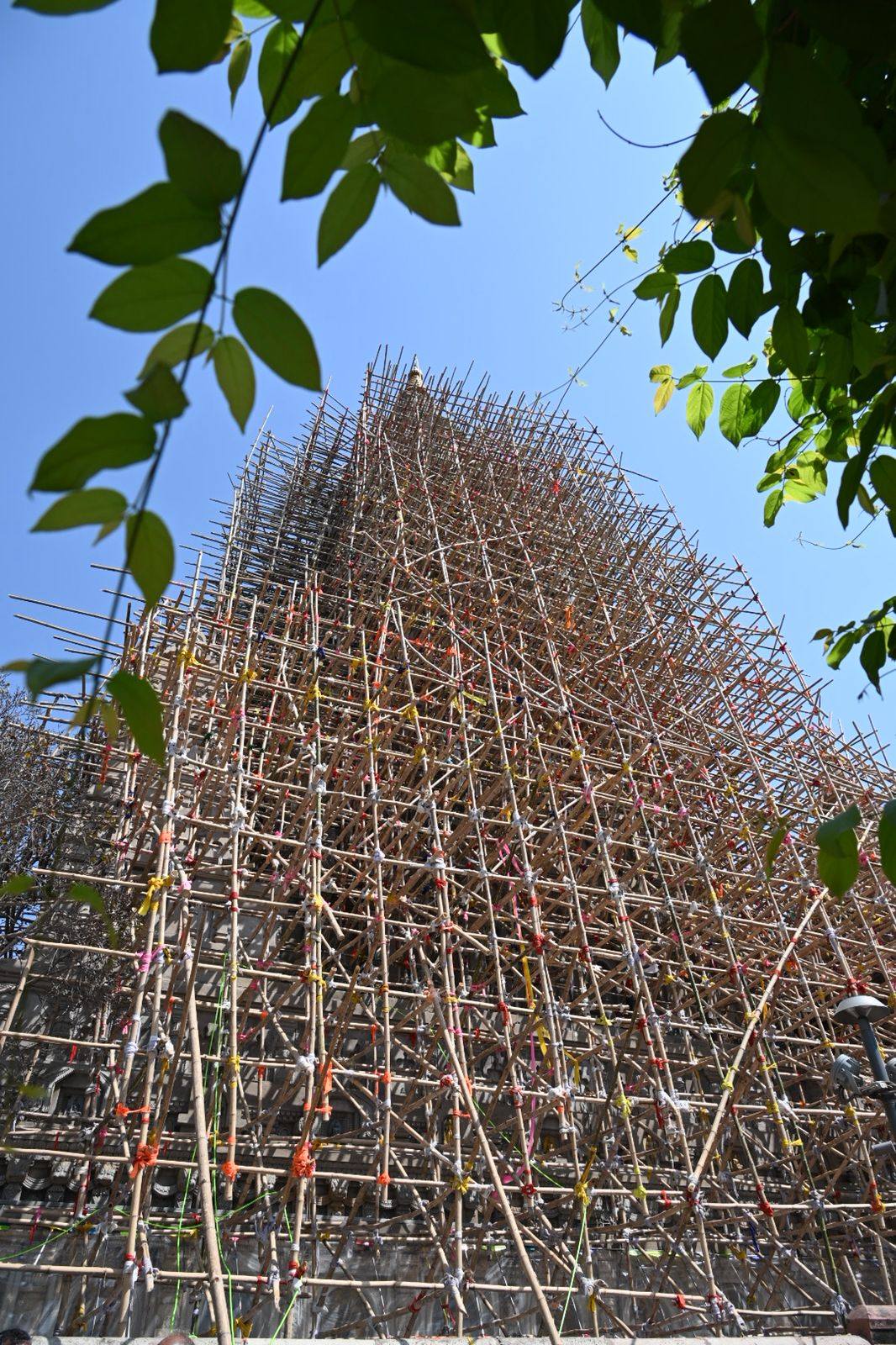
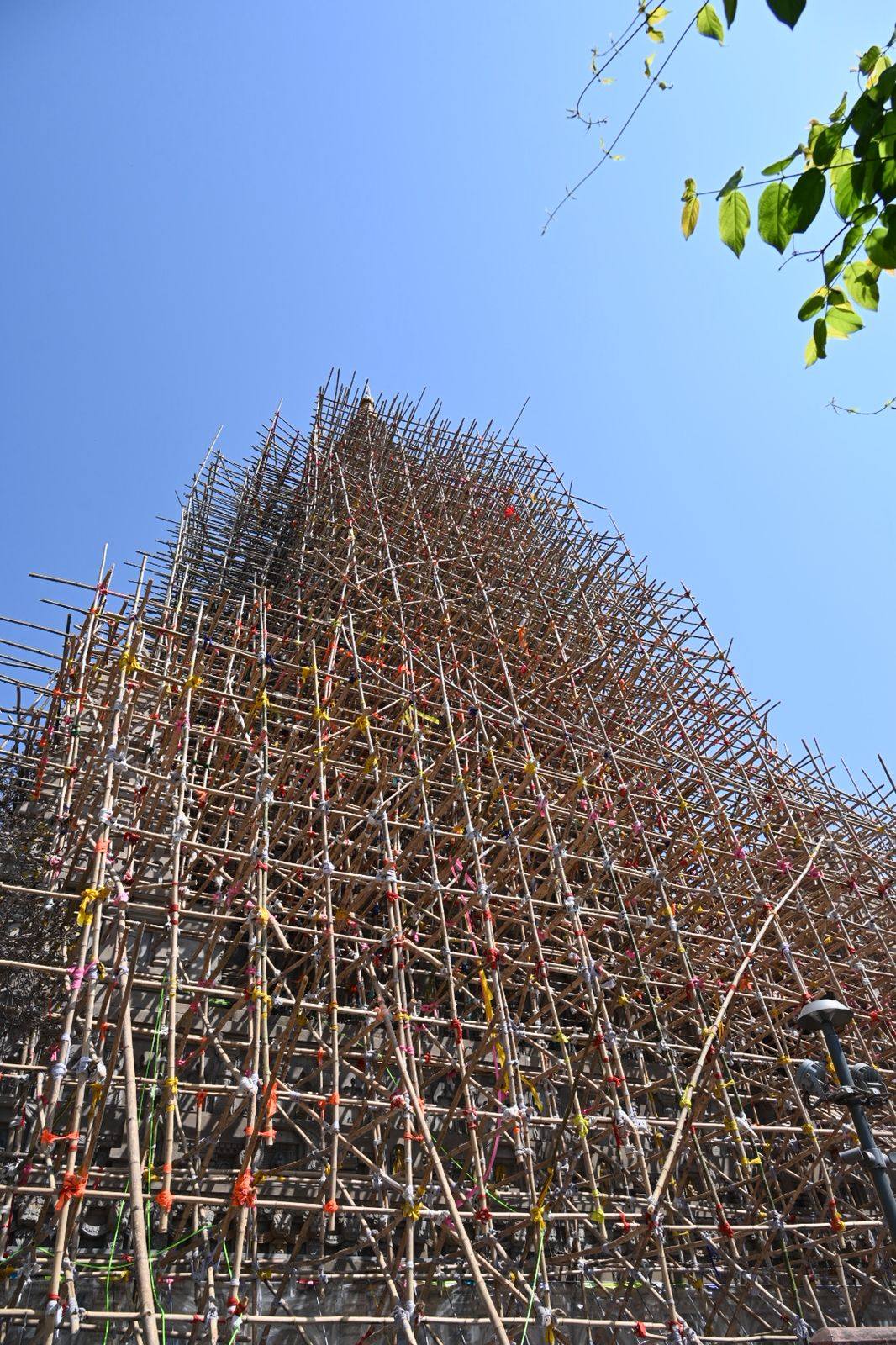
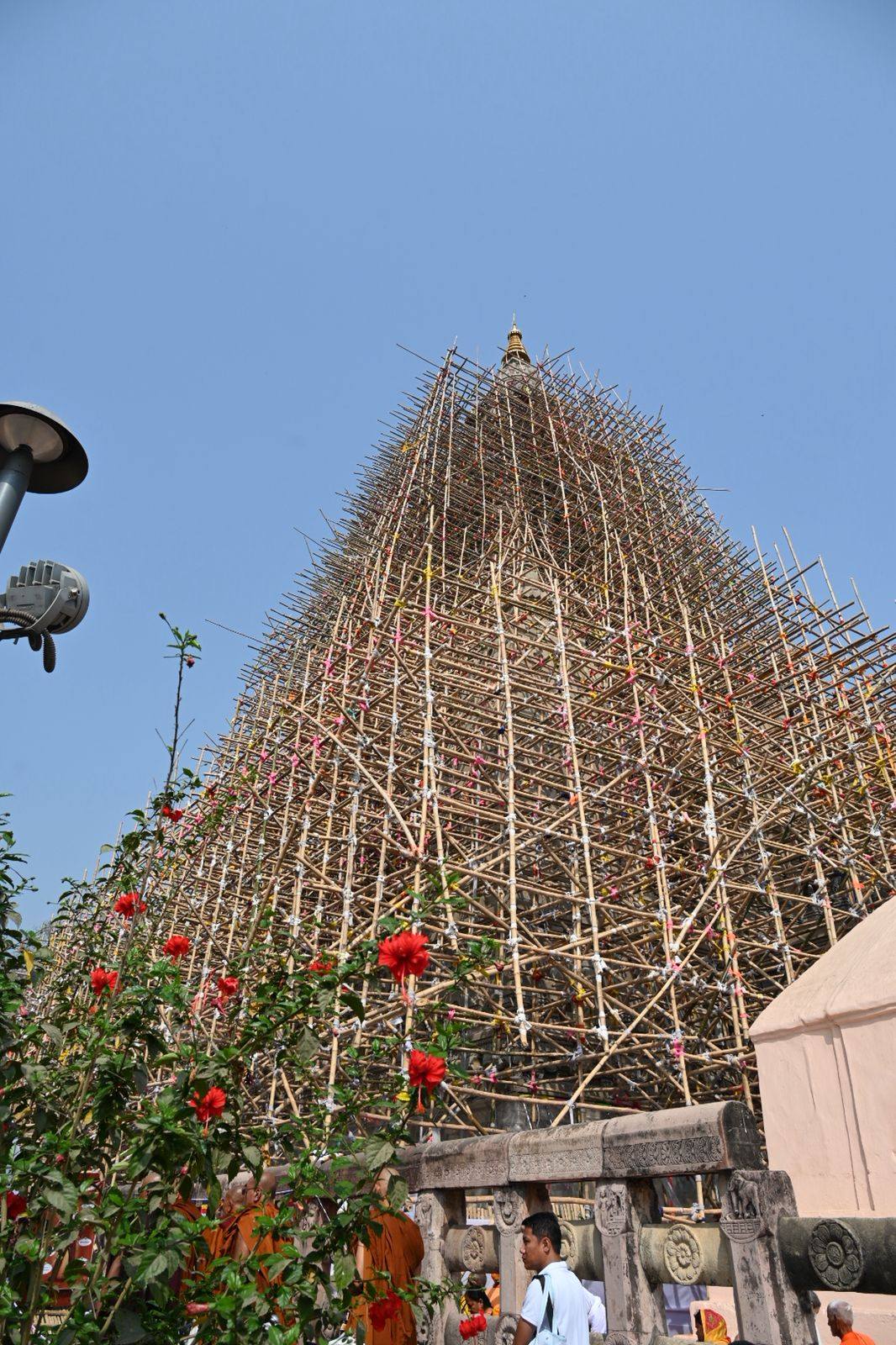
The initiative is being carried out by the Thai volunteer group “Chobtham” as a profound gesture of devotion, service, and Buddhist solidarity. The cleaning process adheres strictly to established conservation guidelines to preserve the temple’s sanctity, structural integrity, and invaluable heritage value.
Key features of the hydro-cleaning process:
No chemicals are used —only pure water under controlled pressure is employed to gently remove dirt, biological growth, and surface impurities.
Non-invasive bamboo scaffolding has been erected to facilitate safe and careful access.
The work is executed with the utmost care, full devotion, and emotional reverence, while following all conservation norms and safety protocols.
Regular coordination and monitoring are in place with the Archaeological Survey of India (ASI). An ASI representative remains present throughout the scaffolding erection and cleaning phases to ensure complete compliance. The entire effort is monitored under the guidance of Superintending Archaeologist Dr. Hari Om and his dedicated team.
Regular cleaning is an essential aspect of preventive conservation for this living monument. Periodic maintenance helps avoid further decay, ensuring the long-term preservation of the Mahabodhi Mahavihara for future generations.
Progress update (as of 16 March 2026): Approximately 60% of the hydro-cleaning work has been successfully completed. The remaining portion is on track and expected to be fully finished well before Buddha Purnima on 1 May 2026, allowing the temple to shine in its pristine glory for this auspicious occasion celebrating Lord Buddha’s birth, enlightenment, and Mahaparinirvana.
This collaborative effort reflects deep respect for the site’s spiritual and historical significance, combining international devotion with professional heritage conservation.